

분말 연삭기ball mill for mining &fine powder making
silica/Barite/limestone powder plant


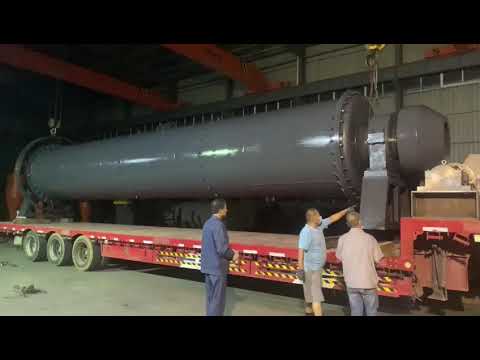


기계 정보
가격 및 위치
- 위치:
- Dahuangye Industrial zone, XinXing East RD, Gongyi, 451200 Zhengzhou, China
기술 세부 사항
- 동력:
- 300 킬로와트 (407.89 마력)
제안 세부 정보
- 광고 ID:
- A14521348
- 업데이트:
- 마지막 업데이트: 08.03.2026
설명
A ball mill is a fundamental grinding device widely used in mining, metallurgy, cement, and chemical industries. It is designed to grind ores and other materials into fine powder through impact and attrition between steel balls and the material inside a rotating cylindrical shell. In mining plants, ball mills are essential for ore beneficiation, while in powder-making industries, they ensure uniform particle size and high surface area for further processing.
Working Principle
The ball mill operates on the principle of impact and friction. As the cylindrical shell rotates around its horizontal axis, the grinding media—usually steel or ceramic balls—are lifted along the inner wall by centrifugal force and friction. When they reach a certain height, they fall freely, striking and grinding the material below. This repeated motion breaks down the material into fine particles. The process can be carried out in dry or wet conditions depending on the application.
Structural Composition
A standard ball mill consists of several main components:
Feeding part: Ensures uniform material input through a feeder or screw conveyor.
Discharging part: Can be grate type or overflow type, depending on the discharge method.
Rotating part: The cylindrical shell made of steel plates, lined with wear-resistant liners.
Transmission system: Includes motor, reducer, small transmission gear, and electrical control.
Grinding media: Steel or ceramic balls of various diameters for efficient grinding.
The internal liner design and ball size distribution are optimized to achieve maximum grinding efficiency and minimal energy consumption.
Iiedpfjq Ngafox Aigjg
Technical Details/Typical Specifications:
Feeding size: ≤25 mm
Discharge size: 0.074–0.4 mm
Capacity: 0.65–615 t/h (depending on model and material hardness)
Cylinder speed: 18–38 r/min
Power: 18.5–4500 kW
Liner material: High manganese steel, rubber, or alloy steel
Grinding media load: 30–45% of cylinder volume
Operating Modes:
Dry grinding: Used for materials that must remain moisture-free, such as cement clinker, limestone, and quartz.
Wet grinding: Common in ore beneficiation, where water or slurry improves grinding efficiency and particle uniformity.
Application in Mining and Powder Production
In mining operations, ball mills are used after crushing to further reduce ore size and liberate valuable minerals. They are integrated into grinding circuits with classifiers, hydrocyclones, and flotation systems. The ground material is classified by size, and oversized particles are returned to the mill for regrinding. This closed-circuit system ensures consistent product fineness and efficient energy use.
In fine powder production, ball mills are used to produce materials such as silicate, ceramic powder, refractory materials, and chemical raw materials. The uniform particle size achieved by ball milling enhances product quality and performance in downstream applications.
Conclusion
A ball mill is an indispensable piece of equipment for both mining and fine powder making. Its ability to grind materials into fine, uniform particles makes it vital for ore beneficiation and industrial powder production. With flexible configurations, high efficiency, and reliable operation, modern ball mills provide a cost-effective and energy-efficient solution for large-scale grinding, ensuring consistent quality and productivity across diverse applications.
공급자
등록일: 2024
50 온라인 광고

문의 보내기
전화기 & 팩스


 Guipúzcoa
 ELTERMA / IPSENVDFC-413

 Dortmund
 VEI-EngineeringVEI_KO_V_GB_400-350


 Gdańsk
 Taiwan Pulp MoldingTPM-1500
 Soerendonk
 Takraf / ZemafZWB 630 x 800 - 1


 Zheng Zhou Shi
 Rod ball mill / Rod Grinding MillFor Sand and mining beneficiation plant


 Meiningen
 NaberthermN1000/H mit NCC


 Seva
Seva CENTRIFUGESCA-700


 Schorfheide
 Sonstige/OtherFrumecar Modulmix 2000

 Dortmund
 VEI-EngineeringLKdg 380/100/150


 Dortmund
 SCHMETZIKU 140/2.

Machineseeker-신뢰의 인증 마크
신뢰 마크란 무엇입니까?
Machineseeker는 선정된 딜러에게 Machineseeker 신뢰 인증마크를 부여합니다. 발급 전에 숙련된 Machineseeker 직원에 의해 표준화되고 철저한 검사가 수행됩니다.
우리는 무엇을 점검합니까?

영업 허가증 또는 상업 등기부 등본의 확인
판매자의
우편 주소 확인
은행 연결의 검증
대표 번호의
전화
접근 가능성 확인
경제 정보
에는 부정적인 특성이 포함되어서는 안 됩니다
구매자 불만
은(는) 인증 마크 박탈로 이어질 수 있습니다이것이 구매자로서 귀하에게 어떤 의미가 있습니까?
Machineseeker 신뢰 씰을 통해 구매자는 직접 검증하지 않고도 매우 높은 확률로 정직하고 성실하게 거래하는 신뢰할 수 있는 판매자를 식별할 수 있습니다.
물론 구매 과정에서 의견 차이가 발생할 수 있습니다. Machineseeker는 Machineseeker에서 활동 중인 구매자 또는 판매자에 의한 법률 위반에 대해 책임을 지지 않습니다.